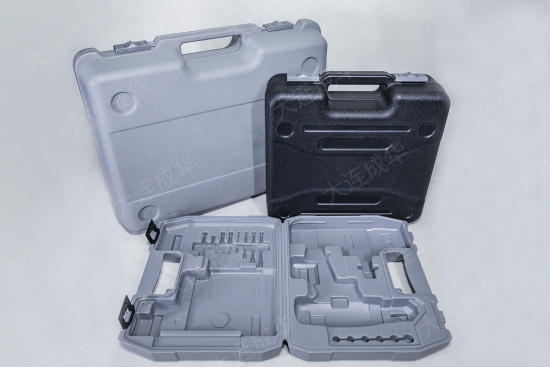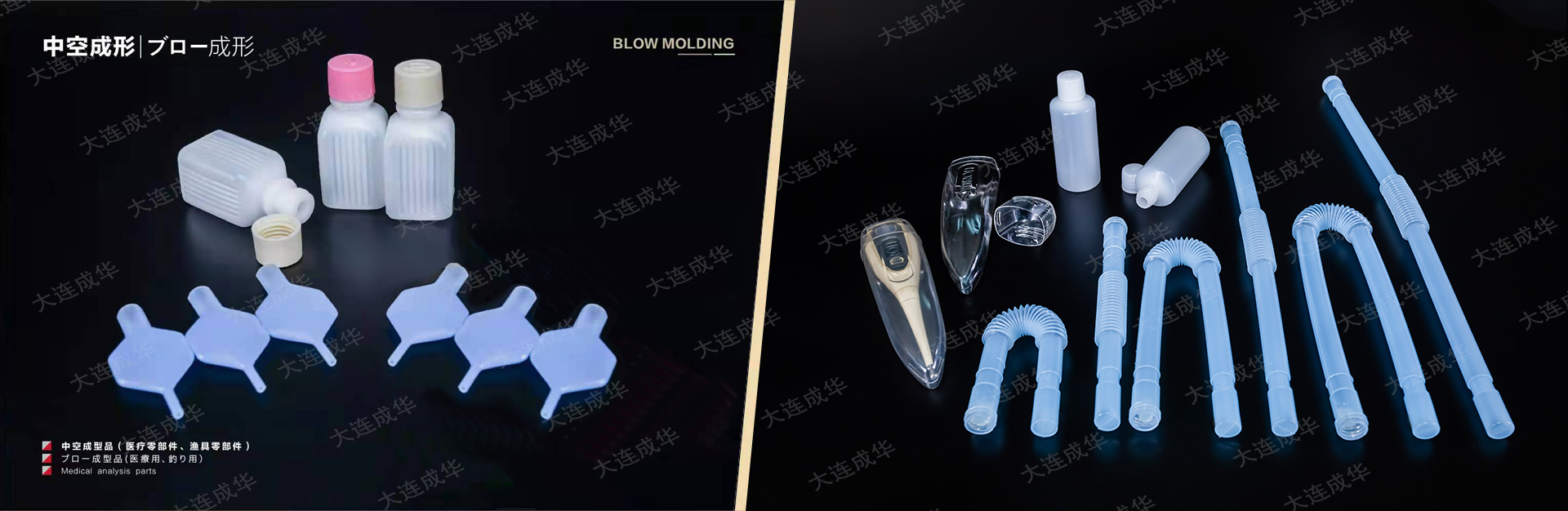
Hollow forming technology, as an important plastic processing technology, has the advantages of high production efficiency, low cost, and lightweight products, and is widely used in various fields such as packaging, automotive, medical, and home furnishings. With the continuous advancement of technology, hollow forming technology will continue to develop, producing hollow products with better performance and richer functions to meet the ever-changing market demands.
More and more hollow forming equipment is adopting advanced control systems and sensor technology to achieve intelligent monitoring and automated operation of the production process. By monitoring process parameters in real-time and automatically adjusting them, production efficiency and product quality stability can be improved, manual intervention can be reduced, and production costs can be lowered.
What factors should be considered in the mold design of hollow formed products in Dalian?
Shape and dimensional accuracy of the product
Shape: Design the mold cavity based on the outline of the product. For complex shapes, a combination mold or special core pulling mechanism may be required to achieve demolding. For hollow products with side holes or protrusions, corresponding lateral core pulling mechanisms need to be designed to facilitate smooth removal of the product after molding.
Dimensional accuracy: Consider the shrinkage rate of plastic and accurately calculate the mold size. Generally, appropriate shrinkage allowance should be reserved based on material characteristics and molding process experience. For polyethylene materials with high shrinkage rates, the cavity size should be appropriately enlarged when designing the mold to ensure that the product achieves the specified dimensional accuracy.
Material characteristics
Liquidity: Materials with good fluidity are easy to fill the mold cavity, but there may be overflow issues; Materials with poor fluidity require greater molding pressure and may result in insufficient filling. If polypropylene material has good flowability, the gate and runner design of the mold should prevent overflow, while polycarbonate has relatively poor flowability, and the mold design should consider how to improve its filling performance.
Shrinkage rate: Different materials have different shrinkage rates, and even for the same material, different additives or molding conditions can cause variations in shrinkage rate. When designing the cooling system for molds, it is important to ensure uniform cooling for materials with high shrinkage rates to reduce deformation caused by uneven shrinkage.
Cooling system
Cooling efficiency: The layout of the cooling water channel should be reasonable, so that the cooling water can flow evenly over the surface of the mold cavity and quickly remove heat. For large hollow product molds, multiple cooling water channels can be used to ensure consistent cooling speed in all parts.
Uniformity of cooling: By optimizing the shape, size, and spacing of the cooling water channels, the cooling of various parts of the product is ensured to be uniform, preventing local overheating or undercooling that may cause deformation, shrinkage marks, and other defects in the product. For example, for products with uneven wall thickness, the density of cooling water channels can be increased or the cooling water flow rate can be increased at thick walls.
exhaust system
Exhaust position: Exhaust grooves or holes are set at the parting surface of the mold, the fitting gap between the core and the cavity, etc., to exhaust the air between the billet and the mold cavity. Especially in the corners, edges, and thick walled areas of the product, it is easy for air to accumulate, so a reasonable exhaust structure should be set up.
Exhaust volume: Calculate the required exhaust volume based on the volume and molding speed of the product to ensure timely air discharge during the blow molding process, avoiding problems such as bubbles and uneven surfaces. Generally speaking, the faster the molding speed, the greater the required displacement.
Demoulding Mechanism
Top out method: Choose the appropriate top out method based on the structural characteristics of the product, such as push rod top out, push plate top out, or pneumatic top out. For thin-walled hollow products, to prevent deformation during ejection, push plates can be used for ejection or ejection support structures can be installed inside the product.
Top out position: The top out positions should be reasonably distributed to ensure that the product receives uniform force during the demolding process, avoiding damage caused by excessive local force. Usually, the protruding position should be selected at the reinforcing ribs, protrusions, or areas with thicker walls of the product.
Material
Strength and wear resistance: The mold needs to withstand high pressure and friction during the molding process, so it is necessary to choose mold materials with high strength and good wear resistance, such as P20 steel, H13 steel, etc., to ensure the service life of the mold. For hollow product molds with large production batches, surface hardening treatment or hard chromium plating can be used to improve the wear resistance of the molds.
Corrosion resistance: If the molding material contains corrosive components or is used in a humid production environment, the mold material should have good corrosion resistance. For example, corrosion-resistant stainless steel materials should be selected to prevent rust and corrosion on the mold surface, which will affect the quality of the product.
Hollow forming technology can achieve continuous production, high production efficiency, and is suitable for large-scale production. The equipment and material costs of hollow forming technology are relatively low, which can reduce production costs. The products produced by hollow forming technology are lightweight, easy to transport and use. Hollow forming technology can produce hollow products of various shapes and sizes, with flexible design that can meet the needs of different products.
Polyethylene terephthalate (PET) has excellent transparency, barrier properties, and mechanical properties, and is a commonly used material for producing hollow products such as beverage bottles and cosmetic bottles that require high appearance and performance. PET bottles formed by stretch blow molding can achieve thinning and cost reduction while ensuring good mechanical properties.