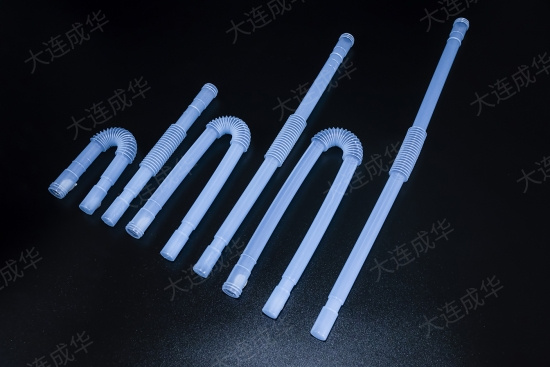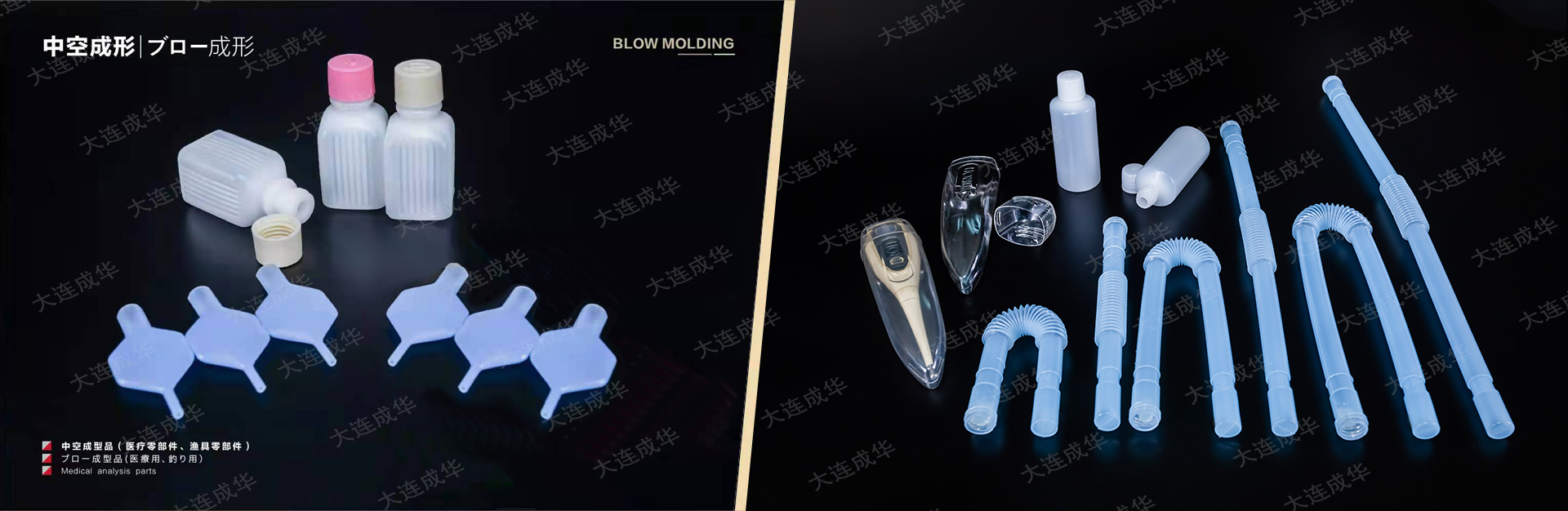
Dalian hollow molding (also known as blow molding) is a widely used process in the production of plastic products, mainly used to manufacture various hollow containers, bottles, oil tanks and other products. As the core equipment of hollow forming technology, the design quality of molds directly affects the appearance, dimensional accuracy, wall thickness uniformity, and production efficiency of products.
2、 Die material selection
Material hardness and wear resistance: Hollow forming molds need to withstand repeated clamping pressure and the impact of plastic melt, and materials with high hardness and good wear resistance, such as P20, H13 and other high-quality mold steels, should be selected.
Thermal conductivity: Good thermal conductivity helps to quickly cool products and shorten the molding cycle. Aluminum alloy molds are used in certain applications due to their excellent thermal conductivity.
Corrosion resistance: For molds used in the production of corrosive materials such as PVC, stainless steel or special surface treatment should be considered.
Processing performance: The material should have good mechanical processing performance, making it easy to manufacture complex cavities and fine textures.
3、 Key points of cavity design
Shrinkage compensation: Accurately calculate the shrinkage rate of plastic materials and compensate for it during mold size design to ensure that the final product size meets the requirements.
Classification surface design:
The parting surface should be as simple and straight as possible, located at the point where the product reaches the large contour
Avoid parting surfaces passing through key exterior surfaces or functional areas
Considering that the flying edge is easy to repair
Exhaust system:
Set up a reasonable exhaust groove, typically with a depth of 0.02-0.05mm
The exhaust groove should be located in the filling area behind the melt
Porous metal or sintered metal inserts can be used to enhance the exhaust effect
Surface Treatment
Select appropriate surface finish according to product requirements
Texture processing needs to consider the effects of demolding slope and plastic shrinkage
When mirror polishing, it is important to ensure that the polishing direction is consistent with the demolding direction
4、 Cooling system design
Cooling water channel layout:
The cooling water channel should be as close as possible to the surface of the mold cavity, but maintain a safe distance
Following the principle of "hot first, cold later", layout starts from the gate area
Ensure even cooling and avoid local overheating
Cooling efficiency optimization:
Adopting a multi loop design, independently controlling cooling in different areas
Consider using turbulence enhancement devices to improve heat transfer efficiency
Special cooling structures can be designed for thick walled areas
Leak proof design:
O-ring sealing needs to consider thermal expansion factors
The waterway connection part adopts tapered pipe thread or flange connection
Setting up leak detection channels for easy maintenance
5、 Demoulding system design
Demoulding slope:
Generally, it is taken as 1 ° -3 °, and deep cavity products require a larger slope
An additional slope of 0.5 ° -1 ° is required on the textured surface
Consider dual slope design to solve the demolding problem of deep cavity products
Top out institution:
The arrangement of the top pole should be balanced to avoid product deformation
The diameter and stroke of the top rod should be reasonably determined according to the size of the product
Consider delaying the ejection or secondary ejection mechanism
Lateral core pulling:
Prioritize the use of inclined top rod mechanism, with a simple and reliable structure
Complex reverse buckling can consider sliding blocks or hydraulic core pulling
Calculate accurate core pulling distance and angle
6、 Strength and lifespan of mold structure
Template thickness calculation: Calculate sufficient template thickness based on the clamping force and cavity pressure to prevent deformation.
Guidance system:
Adopting four corner guide columns for guidance, large molds can add middle guide columns
The length of the guide column should ensure that it has entered the guide before the mold is fully closed
Consider self-lubricating guide sleeves to reduce wear
Fatigue design:
Avoid stress concentration at sharp corners
The high stress area adopts an embedded structure for easy replacement
Surface hardening treatment of key moving parts
7、 Special considerations
Multi layer co extrusion mold: Accurately control the balance of each layer's flow channel to ensure uniform wall thickness distribution.
High barrier products: Special consideration should be given to the distribution control of the sealing structure and barrier layer.
Large scale product molds:
Segmented design facilitates processing and maintenance
Strengthen the design of the cooling system
Consider mold heating and temperature zoning control
Quick mold changing system: Design standardized interfaces to shorten mold changing time.
8、 Mold manufacturing and acceptance
Process planning: Reasonably arrange the processing sequence, first process the reference surface and then process the cavity.
Control of fitting tolerance: The fitting tolerance of key moving parts is usually controlled within 0.01-0.02mm.
Trial validation:
Record the parameters of the first trial mold as a benchmark
Check product flash, wall thickness distribution, dimensional accuracy, etc
If necessary, make mold corrections
The design of hollow forming molds is a comprehensive task that requires designers to possess multidisciplinary knowledge in materials, machinery, fluids, and other fields. Excellent mold design can not only improve product quality and production efficiency, but also extend the service life of molds and reduce production costs. With the popularization of CAE technology, it is recommended to use mold flow analysis software for verification in the design phase to further optimize the design scheme. Meanwhile, designers should closely monitor the development of new materials and processes, constantly updating their design concepts and methods.