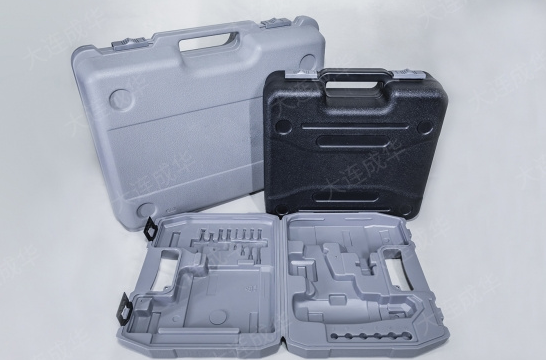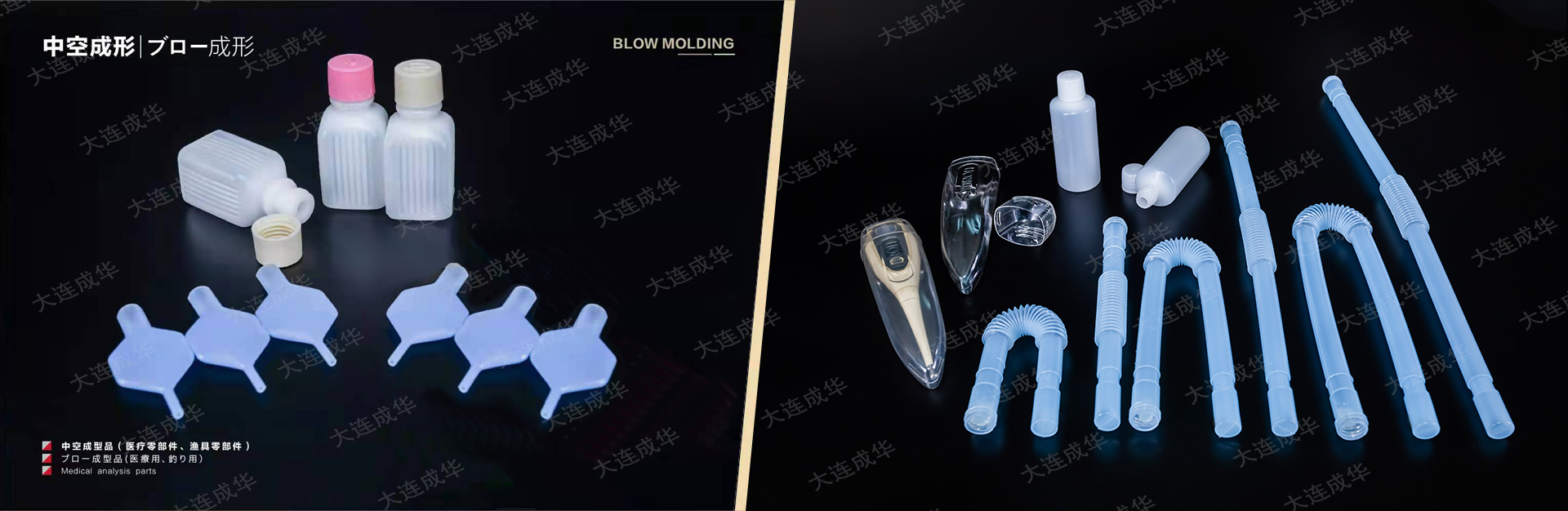
Dalian hollow molding (such as extrusion blow molding, injection blow molding, rotational molding) is the core process for manufacturing plastic hollow products (bottles, barrels, cans, oil tanks, etc.), and temperature control is a key factor determining product quality, production efficiency, and raw material utilization. Its essence is to precisely regulate the temperature of material plasticization, billet formation, blowing and cooling processes to ensure uniform material state and good formability, ultimately obtaining products with uniform wall thickness and stable mechanical properties. The following are the core points of temperature control:
1、 Accurate matching and gradient control of raw material plasticizing temperature
Raw material plasticization is the first step in hollow molding, which requires setting the processing temperature range based on the crystallinity and thermal stability of the plastic, and achieving uniform plasticization through the temperature gradient of the extruder/injection machine.
Adaptation of raw material characteristics: Crystalline plastics (PE, PP) need to reach the melting temperature (PE: 150-220 ℃, PP: 170-230 ℃) to destroy the crystalline zone; Non crystalline plastics (PVC, PETG) need to be controlled above the glass transition temperature (PVC: 160-190 ℃) to avoid degradation. For example, PVC will decompose into HCl at temperatures exceeding 200 ℃, resulting in yellowing of the product and a decrease in its mechanical properties.
Extruder temperature gradient: hopper section (160-180 ℃) to prevent material bridging; The compression section (180-200 ℃) gradually increases the temperature to transform the material from particles to a molten state; The homogenization section (200-220 ℃) is stabilized at the plasticizing temperature to ensure that the material has no crystal points or bubbles. In injection blow molding, the temperature of the preform injection mold should be controlled at 50-80 ℃ to avoid deformation of the preform.
Thermal stability upper limit control: Real time monitoring through screw speed (to avoid excessive material residence time) and temperature sensors to prevent temperature from exceeding the raw material thermal stability threshold and reduce the impact of degradation products on product quality.
2、 Uniformity control of billet temperature
The billet is the "prototype" of hollow products, and its temperature uniformity directly determines the wall thickness distribution and product consistency after inflation.
Partition heating of the die head: The extrusion blow molding die head needs to use partition heating (such as 8-12 independent heating rings) to ensure that the temperature deviation at each point of the die head is ≤± 2 ℃, and to avoid local excessive thickness/thinness of the billet. For example, when the temperature deviation of the PE type blank mold head exceeds 5 ℃, the wall thickness difference of the inflated product can reach more than 15%.
Uniformity of billet cooling: When the extruded billet is cooled by the air cooling ring, the air volume and position of the air ring need to be adjusted to make the outer surface temperature of the billet uniform (axial temperature difference ≤ 5 ℃); Large products (such as 200L barrels) can be cooled by internal water spray, controlling the water spray time and amount to avoid uneven wall thickness caused by internal overheating.
Inter layer matching of multi-layer co extruded preforms: Barrier products (such as EVOH/PE co extruded bottles) need to ensure that the temperature of each layer of material is compatible (such as EVOH processing temperature of 220 ℃, PE200 ℃, mold head temperature set to 210 ℃), to prevent interlayer peeling or poor adhesion.
3、 Temperature optimization of blow molding molds
The temperature of blow molding molds affects the cooling rate, crystallinity, and surface quality of products, and needs to be accurately set according to the type of plastic and product requirements.
Mold temperature for crystalline plastics: Crystalline plastics such as PE/PP, if the mold temperature is too high (>70 ℃), it will prolong the cooling time (reduce efficiency) and the product is prone to deformation; If the temperature is too low (<30 ℃), the crystallization will be insufficient and the impact strength will decrease by more than 30%. Usually, the temperature of PE molds is set at 30-60 ℃, while PP molds are set at 40-70 ℃.
Mold temperature uniformity: The mold cavity, core, and parting surface need to achieve temperature consistency (deviation ≤± 3 ℃) through a cooling water circuit to avoid local shrinkage marks, bubbles, or uneven wall thickness of the product. For example, the car fuel tank mold needs to use a symmetrical cooling water circuit to ensure that the cooling speed of the fuel tank side wall and bottom is the same.
Special control of amorphous plastics: For amorphous plastics such as PVC/PETG, the mold temperature should be slightly higher than room temperature (25-40 ℃) to prevent cold spots or stress cracks on the surface of the product.
4、 Dynamic adjustment of cooling system
The cooling system is a "closed-loop" link for temperature control, which needs to be adjusted in real time according to the production environment and product status.
Cooling water circuit control: The cooling water temperature is stable at 20-30 ℃, and the flow is evenly distributed to each circuit (such as a flow deviation of ≤ 10% on each side of the mold) to avoid local overheating. Large molds can use a constant temperature water tank to ensure water temperature fluctuations of ≤± 1 ℃.
Intelligent adjustment of air-cooled ring: In extrusion blow molding, the airflow of the air-cooled ring needs to dynamically change with the speed of the billet (such as increasing the billet speed by 10% and the airflow by 15%), to prevent the billet from sagging or undercooling. Some high-end devices use a combination of hot air preheating and cold air cooling to compensate for environmental temperature changes (such as increasing the proportion of hot air in winter).
Accurate control of internal cooling: When large barrel products use internal water spray cooling, the water spray time should be synchronized with the inflation process (such as spraying water after 1 second of inflation for 3 seconds) to avoid uneven wall thickness caused by internal supercooling.
5、 Intelligent temperature control strategy in the manufacturing process
Modern hollow forming equipment achieves dynamic temperature optimization through intelligent systems:
Multi point monitoring and PID regulation: The equipment is equipped with 10+temperature sensors for each section, die head, mold, and billet of the extruder. The heating power or cooling flow rate is adjusted in real time through PID algorithm to ensure temperature deviation of ≤± 1 ℃.
Raw material batch adaptation: When the melt index of the raw material changes, the system automatically adjusts the temperature of the homogenization section of the extruder (such as reducing the melt index by 0.5g/10min and increasing the temperature by 5 ℃) to ensure plasticization quality.
Production efficiency and quality balance: By using simulation software to predict the impact of temperature on cooling time, optimize mold temperature while ensuring product quality (such as increasing the temperature of PE barrel mold from 50 ℃ to 60 ℃, reducing cooling time by 15%).
The temperature control of hollow forming is a multi link and multi parameter system engineering, which requires optimization of the entire process from raw material plasticization, billet formation, mold cooling to dynamic adjustment. Accurate temperature control can not only improve the uniformity of product wall thickness (within ± 5%) and mechanical properties (impact strength compliance rate>98%), but also reduce raw material loss (reduce scrap rate by 5-10%) and production energy consumption (save 10-15% heating energy). In the future, with the application of AI and IoT technology, hollow forming temperature control will develop towards "adaptive and self-learning" direction, further enhancing industry competitiveness.