Extrusion molding technology, as an efficient and flexible molding process, plays an important role in modern industrial production. It has a wide range of applications, covering multiple fields such as plastics, rubber, metals, and food. With the continuous advancement of technology, extrusion molding is developing towards intelligence, green environmental protection, high performance, precision, and multifunctionality. In the future, extrusion molding technology will continue to provide strong support for industrial production and promote the transformation and upgrading of the manufacturing industry.
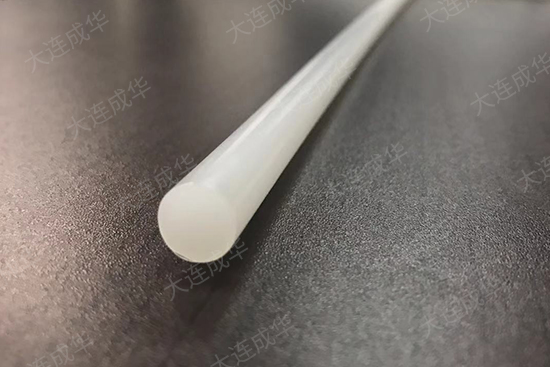
Extrusion molding is one of the main methods of plastic processing, used for producing pipes, sheets, profiles, films, cable sheaths, etc. For example, PVC pipes, PE films, and PP sheets are all produced through extrusion molding. Extrusion molding is also widely used in the production of rubber products, such as rubber tubes, sealing strips, tire treads, and tapes. In the field of metal processing, extrusion molding is used to produce aluminum profiles, copper pipes, steel bars, etc. Aluminum profiles are widely used in the construction, transportation, and electronics industries.
How to ensure uniform heating of plastic raw materials during the extrusion molding process in Dalian?
Equipment aspect
Choose the appropriate extruder:
Screw design: Adopting new screw structures such as separation screws, barrier screws, etc., can enable more thorough mixing and shearing of plastics during extrusion, promoting uniform heat transfer.
Heating and cooling system: equipped with advanced heating and cooling systems, such as cast aluminum heaters or ceramic heaters, which have the characteristics of fast heating and good temperature uniformity; The cooling system can choose water cooling or air cooling to adjust the temperature in a timely manner.
Regular maintenance of equipment:
Check heating elements: Regularly inspect heating elements such as heating coils and thermocouples, and replace damaged or aging components in a timely manner to ensure heating effectiveness.
Cleaning the material barrel and screw: Regularly clean the accumulated materials and impurities on the surface of the material barrel and screw to prevent them from affecting heat transfer and the uniformity of plastic flow.
In terms of process parameters
Optimize temperature setting: Based on the characteristics of plastic raw materials and the structure of the extruder, set the temperature of each section of the material barrel reasonably. Generally speaking, the temperature gradually increases from the hopper end to the machine head direction to ensure that the plastic raw materials are gradually and uniformly plasticized.
Adjusting the screw speed: The screw speed affects the residence time and shear degree of plastic in the barrel. Appropriately reducing the screw speed can allow more time for plastic to receive uniform heating inside the barrel; However, a low rotational speed can affect production efficiency, and a suitable balance point needs to be found.
Control extrusion speed: A stable extrusion speed helps ensure that plastic raw materials are uniformly heated in the heating area. If the extrusion speed is too fast, the plastic may not have enough time to fully heat up; If it is too slow, it may cause the plastic to overheat. The extrusion speed should be adjusted to the appropriate level based on the equipment and raw material conditions.
In terms of raw material pretreatment
Dry raw materials: For plastic raw materials with strong moisture absorption, such as polyamide, polycarbonate, etc., they should be thoroughly dried before extrusion to remove moisture. The presence of moisture can cause local overheating or hydrolysis reactions in plastics during heating, affecting heating uniformity and product quality.
Mixing additives: If additives such as plasticizers, stabilizers, color masterbatch, etc. need to be added to plastic raw materials, it should be ensured that the additives are fully and evenly mixed with the raw materials. High speed mixers or twin-screw mixers can be used for pre mixing to evenly distribute additives in the raw materials and avoid uneven heating caused by local concentration of additives.
Extrusion molding is an important molding process widely used in the processing of materials such as plastics, rubber, metals, and food. It forms continuous products with specific cross-sectional shapes by extruding heated and softened materials through molds. Extrusion molding technology has become an indispensable part of modern industrial production due to its high efficiency, flexibility, and low cost.
During the extrusion process, the pressure inside the mold needs to be kept stable to ensure the dimensional accuracy and surface quality of the product. The cooling rate affects the crystallinity and internal stress of the product, and too fast or too slow cooling may cause deformation or cracking of the product. The traction speed needs to be matched with the extrusion speed to ensure the dimensional stability and surface smoothness of the product.