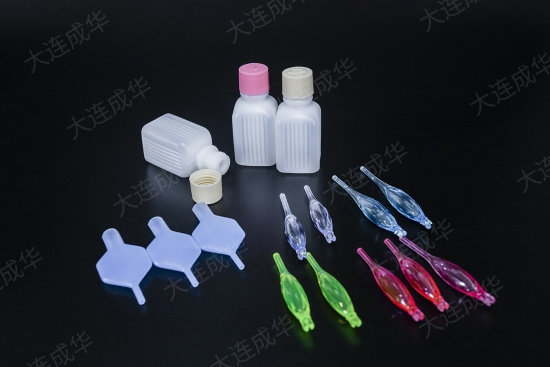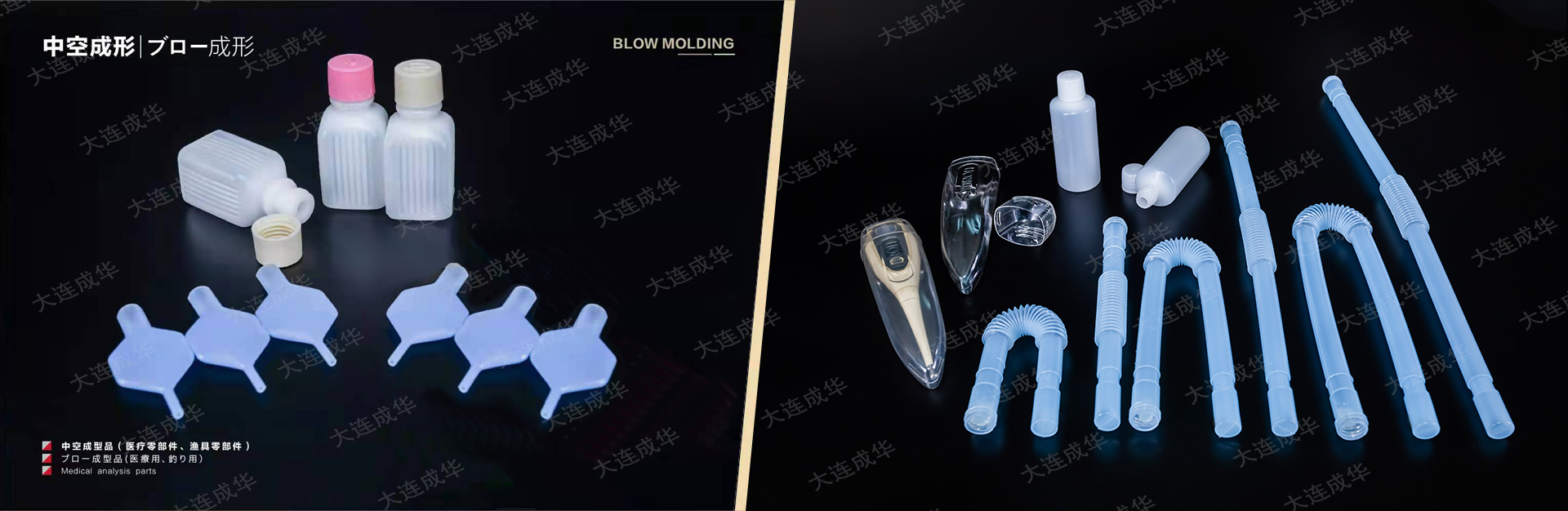
Hollow molding technology, as an efficient, flexible, and cost-effective plastic molding process, has been widely used in multiple industries. With the continuous emergence of new materials, processes, and technologies, hollow forming technology will continue to develop, providing the market with more high-quality and high-performance hollow products and promoting the continuous progress of the plastic products industry.
The performance of hollow molded products largely depends on the plastic material used. Common hollow molding materials include polyethylene (PE), polypropylene (PP), polyethylene terephthalate (PET), etc. In order to improve the performance of the product, the material can also be modified by adding fillers, plasticizers, antioxidants, etc.
What are the factors affecting the shrinkage rate of hollow formed products in Dalian?
Material characteristics
Molecular structure: Materials with high flexibility and good regularity of molecular chains, such as polyethylene, have strong chain segment mobility, and the molecular chains are prone to curling and rearrangement after molding, resulting in a high shrinkage rate. Materials with high molecular chain rigidity and a large number of polar groups, such as polyvinyl chloride, have strong intermolecular forces, limited chain segment activity, and relatively small shrinkage rates.
Additives: Plasticizers, fillers, and other additives added to plastics can affect the shrinkage rate of the material. The addition of plasticizers will increase the distance between molecular chains, reduce intermolecular forces, and thus increase the shrinkage rate of the material. The addition of fillers usually reduces the shrinkage rate of materials, as fillers can restrict the movement of molecular chains and their own thermal expansion coefficient is generally smaller than that of plastic matrices.
Molding process parameters
Molding temperature: A higher molding temperature enhances the activity of plastic molecular chains, allowing more time for them to arrange and shrink during the cooling process, resulting in an increase in shrinkage rate. Meanwhile, excessive temperature may also cause thermal degradation of the material, affecting its properties and further affecting its shrinkage rate.
Molding pressure: Increasing the molding pressure appropriately can make the plastic more compact in the mold, reduce internal pores, and thus lower the shrinkage rate. However, excessive pressure may lead to an increase in internal stress in the product, and the release of internal stress after demolding may also cause some shrinkage.
Cooling speed: Rapid cooling will freeze the plastic molecular chains in a short period of time, leaving insufficient time for them to fully shrink, thereby reducing the shrinkage rate of the product. However, excessive cooling rate may cause significant internal stress in the product, affecting its dimensional stability and mechanical properties.
mould design
Mold temperature: Mold temperature has a direct impact on the cooling process of the product. The temperature uniformity of the mold is good, the cooling of the product is uniform, and the shrinkage rate is also relatively uniform; On the contrary, if the mold temperature is uneven and the cooling rate of different parts of the product is different, it will lead to inconsistent shrinkage rates and deformation.
Demoulding mechanism: Unreasonable demoulding mechanisms may subject the product to uneven forces during the demoulding process, resulting in additional shrinkage or deformation locally. For example, the uneven position and force of the ejection device can cause certain parts of the product to experience significant ejection pressure, thereby affecting the shrinkage rate.
Product structure
Wall thickness: The larger the wall thickness of the product, the longer the cooling time, and the more time the internal plastic molecular chains have to shrink, resulting in a relatively large shrinkage rate. Moreover, thick walled products are prone to significant temperature gradients during the cooling process, resulting in high internal stress and further affecting the shrinkage rate.
Shape complexity: For products with complex shapes, it is difficult to control the shrinkage rate due to the mutual influence of cooling rate and shrinkage in different parts. For example, products with transitions between thin and thick walls, reinforced ribs, or holes are prone to uneven shrinkage at these structural changes.
Hollow forming technology is widely used in the following fields: food and beverage packaging, such as mineral water bottles, beverage bottles, edible oil bottles, etc., requiring products to have good barrier properties and chemical resistance. Cosmetics packaging: such as perfume bottles, lotion bottles, shampoo bottles, etc., the products are required to have good appearance and mechanical properties. Medical packaging, such as medication bottles, infusion bottles, syringes, etc., requires products to have good barrier properties and hygiene.
The basic process of hollow forming includes the following steps: melting plastic: heating plastic particles or powder to a molten state to form a flowable plastic melt. Molding of parison: Molten plastic is molded into tubular parison using an extruder or injection molding machine. Blow molding: Place the billet into the mold and inflate it with compressed air to make it tightly adhere to the inner wall of the mold, forming the desired hollow shape. Cooling and shaping: Cooling in the mold to solidify and shape the plastic. Demoulding: Open the mold and take out the formed hollow product.