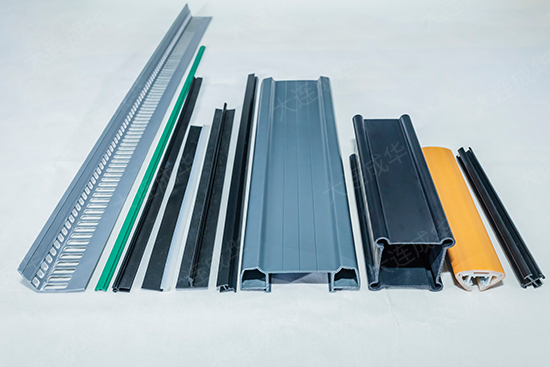
Dalian extrusion molding is a processing method that extrudes molten materials through molds to form continuous profiles. It has a wide range of applications, covering various materials such as plastics, rubber, metals, ceramics, etc. Choosing appropriate materials is crucial for ensuring product quality and reducing production costs. The following will elaborate on the techniques for selecting extrusion molding materials from four aspects: material characteristics, product requirements, processing technology, and cost control.
1、 Select based on material properties
Liquidity: Extrusion molding requires materials to have good fluidity to ensure that they can smoothly pass through the mold and form the desired shape. Usually, the melt index (MFI) is an important indicator for measuring the flowability of materials, and the higher the MFI value, the better the flowability.
Thermal stability: During the extrusion molding process, the material undergoes high temperature heating and shear effects, so it is necessary to choose materials with good thermal stability to avoid adverse phenomena such as degradation and discoloration.
Mechanical properties: The mechanical properties of materials, such as strength, toughness, wear resistance, etc., directly affect the service life of products. Select materials with corresponding mechanical properties based on the application scenario of the product.
Chemical resistance: If the product needs to come into contact with chemical substances, it is necessary to choose materials with good chemical resistance to avoid corrosion, swelling, and other phenomena.
Other characteristics: According to the special requirements of the product, other characteristics such as transparency, flame retardancy, conductivity, and thermal conductivity of the material also need to be considered.
2、 Select according to product requirements
Product shape and size: Different product shapes and sizes have different requirements for material flowability, shrinkage rate, etc. For example, products with complex shapes require the selection of materials with better fluidity, while products with high dimensional accuracy requirements require the selection of materials with lower shrinkage rates.
Product use: The purpose of a product determines its required performance. For example, food packaging materials need to comply with food safety standards, while medical device materials need to have good biocompatibility.
Appearance requirements: The appearance requirements of the product, such as color, glossiness, surface smoothness, etc., also need to be considered when selecting materials.
3、 Select according to the processing technology
Extrusion temperature: Different materials have different melting temperature ranges, and it is necessary to choose the appropriate extrusion temperature based on the characteristics of the material to ensure its fluidity and product quality.
Extrusion pressure: The magnitude of extrusion pressure can affect the density and dimensional accuracy of the product. It is necessary to choose the appropriate extrusion pressure based on the fluidity of the material and the shape and size of the product.
Mold design: The design of the mold has a significant impact on the shape, size, surface quality, and other aspects of the product. It is necessary to design a reasonable mold structure based on the characteristics of the material, the shape, size, and appearance requirements of the product.
Post processing technology: Some products require post-processing after extrusion molding, such as heat treatment, surface treatment, etc. It is necessary to choose materials suitable for post-processing.
4、 Choose based on cost control
Material price: Material price is an important factor affecting product cost. It is necessary to choose materials with low prices as much as possible while meeting the performance requirements of the product.
Processing cost: Different materials have different processing difficulties, and it is necessary to choose materials that are easy to process in order to reduce processing costs.
Recycling: Considering the recycling performance of materials, selecting recyclable materials can reduce production costs and minimize environmental pollution.
5、 Common extruded materials
Plastics: polyethylene (PE), polypropylene (PP), polyvinyl chloride (PVC), polystyrene (PS), ABS, polyamide (PA), polycarbonate (PC), etc.
Rubber: natural rubber, styrene butadiene rubber, butadiene rubber, ethylene propylene rubber, silicone rubber, etc.
Metals: aluminum, copper, zinc, magnesium, etc.
Ceramics: alumina, zirconia, silicon nitride, etc.
The selection of extrusion molding materials is a complex process that requires comprehensive consideration of various factors such as material characteristics, product requirements, processing technology, and cost control. Only by selecting appropriate materials can high-quality and low-cost products be produced.
Here are some additional suggestions:
When selecting materials, you can refer to the performance data manual of the relevant materials or consult the material supplier.
Small batch trial production can be conducted to verify the processing performance and product quality of materials.
Pay attention to the development trends of new materials and apply them to production in a timely manner.