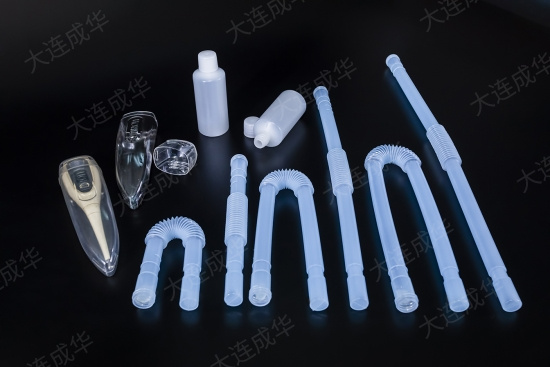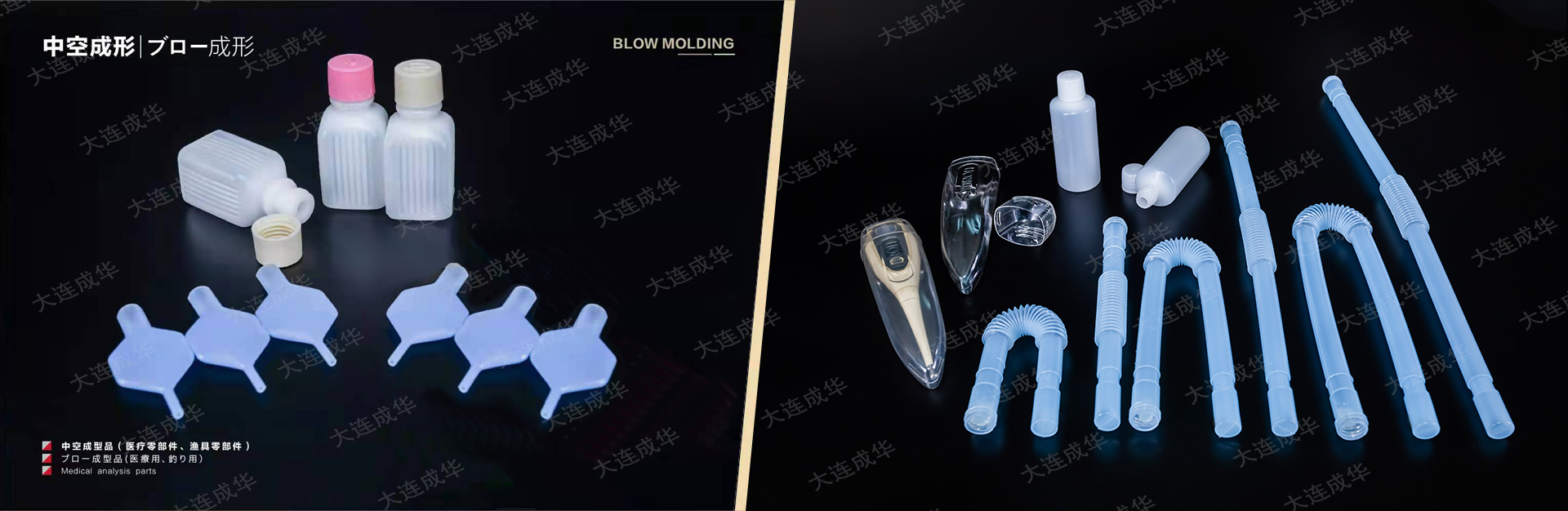
Dalian hollow molding (also known as blow molding) is a widely used processing technology for manufacturing plastic products, mainly used for producing hollow containers or components such as bottles, cans, barrels, etc. The selection of materials in the hollow forming process has a significant impact on the performance, cost, and production efficiency of the product. The following are the key factors to consider when selecting hollow forming materials:
1. Mechanical properties of materials
Mechanical performance is the main consideration when choosing hollow forming materials, which directly affects the strength, durability, and service life of the product.
Impact resistance: Hollow molded products (such as bottles and cans) may be subjected to external impacts during use, so the material needs to have good impact resistance to avoid cracking or deformation. For example, polycarbonate (PC) and polyethylene terephthalate (PET) have high impact resistance.
Tensile strength: The material needs to have sufficient tensile strength to withstand internal pressure or external loads. High density polyethylene (HDPE) and polypropylene (PP) are commonly used materials with high tensile strength.
Fatigue resistance: For products that require repeated use, materials should have good fatigue resistance to extend their service life.
2. Chemical properties of materials
Hollow formed products are typically used for storing or transporting liquids, chemicals, or food, so the chemical properties of the material are crucial.
Chemical corrosion resistance: The material needs to be able to resist the corrosion of the chemicals it comes into contact with. For example, polytetrafluoroethylene (PTFE) and polyvinylidene fluoride (PVDF) have excellent chemical corrosion resistance.
Food safety: Materials used for food packaging must comply with food safety standards and cannot release harmful substances. PET and HDPE are commonly used food grade plastics.
Weather resistance: If the product needs to be used outdoors, the material should have good UV resistance, oxidation resistance, and aging resistance.
3. Processing performance of materials
The processing performance of materials directly affects the production efficiency and product quality of hollow forming.
Melt index: The melt index of a material determines its fluidity. Materials with good fluidity are easier to form, but excessive fluidity may lead to uneven wall thickness. Commonly used hollow molding materials such as HDPE and PP have moderate melt indices.
Thermal stability: The material should remain stable at high temperatures to avoid decomposition or the formation of bubbles. PET and PC have good thermal stability.
Cooling rate: The cooling rate of materials affects the production cycle. Slow cooling can prolong production time, while fast cooling may cause product deformation or internal stress concentration.
4. Transparency and appearance of materials
For some products that require displaying content, such as beverage bottles, the transparency and appearance of the materials are crucial.
Transparency: PET and PC are commonly used high transparency materials, suitable for products that require displaying content.
Glossiness: The glossiness of materials affects the appearance and texture of products. For example, HDPE has lower glossiness, while PET has higher glossiness.
Color stability: The material should have good color stability to avoid fading or discoloration during use.
5. Cost and availability of materials
Cost is an important economic factor in material selection, and the availability of materials also affects production plans.
Raw material costs: The prices of different materials vary greatly. For example, HDPE and PP have lower costs, while PC and PTFE have higher costs.
Processing cost: The difficulty and energy consumption of material processing can also affect the overall cost. For example, the processing cost of PET is lower, while the processing cost of PC is higher.
Supply chain stability: The availability of materials and supply chain stability are key factors in ensuring production continuity.
6. Environmental performance of materials
With the increasing awareness of environmental protection, the environmental performance of materials has become an increasingly important consideration.
Recyclability: Materials should be easy to recycle and reuse. For example, HDPE and PET are widely recycled plastic materials.
Biodegradability: For disposable products, biodegradable materials such as polylactic acid PLA are a more environmentally friendly choice.
Carbon footprint: The carbon emissions during the production and use of materials are also environmental indicators that need to be considered.
7. Functional requirements of the product
Different products have different functional requirements for materials, and material selection needs to be adjusted according to specific application scenarios.
High temperature resistance: Products used in high-temperature environments (such as hot water bottles) require the selection of high-temperature resistant materials, such as PC.
Barrier properties: Products used for storing gases or volatile liquids require the selection of materials with good barrier properties, such as ethylene vinyl alcohol copolymers (EVOH).
Flexibility: For products that require flexibility, such as hoses, low-density polyethylene (LDPE) or thermoplastic elastomers (TPE) can be chosen.
8. Regulations and standards
The selection of materials also needs to comply with relevant regulations and industry standards.
International standards: such as the requirements of the FDA (US Food and Drug Administration) for food contact materials.
Industry standards: Special requirements for materials in industries such as automotive and medical.
Local regulations: Different countries and regions have different regulations on the use and recycling of plastic materials.
9. Innovation and Development of Materials
With the advancement of materials science, new materials continue to emerge, providing more choices for hollow forming.
Nanocomposite materials: By adding nanoparticles, the strength, barrier properties, and heat resistance of the material can be improved.
Biobased materials such as PLA and polyhydroxyalkanoates (PHA) are renewable biobased materials with environmental advantages.
Functional coating: By adding coatings on the surface of materials, their barrier properties, wear resistance, or antibacterial properties can be enhanced.
The selection of hollow molding materials is a process that comprehensively considers mechanical properties, chemical properties, processing performance, cost, environmental performance, functional requirements, and regulatory standards. Different application scenarios have different requirements for materials, so when selecting materials, it is necessary to weigh specific needs. With the continuous development of materials science, there will be more high-performance and environmentally friendly materials applied in the field of hollow forming in the future, bringing more possibilities to the industry.