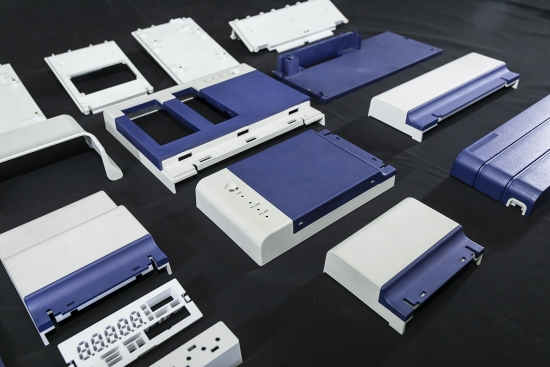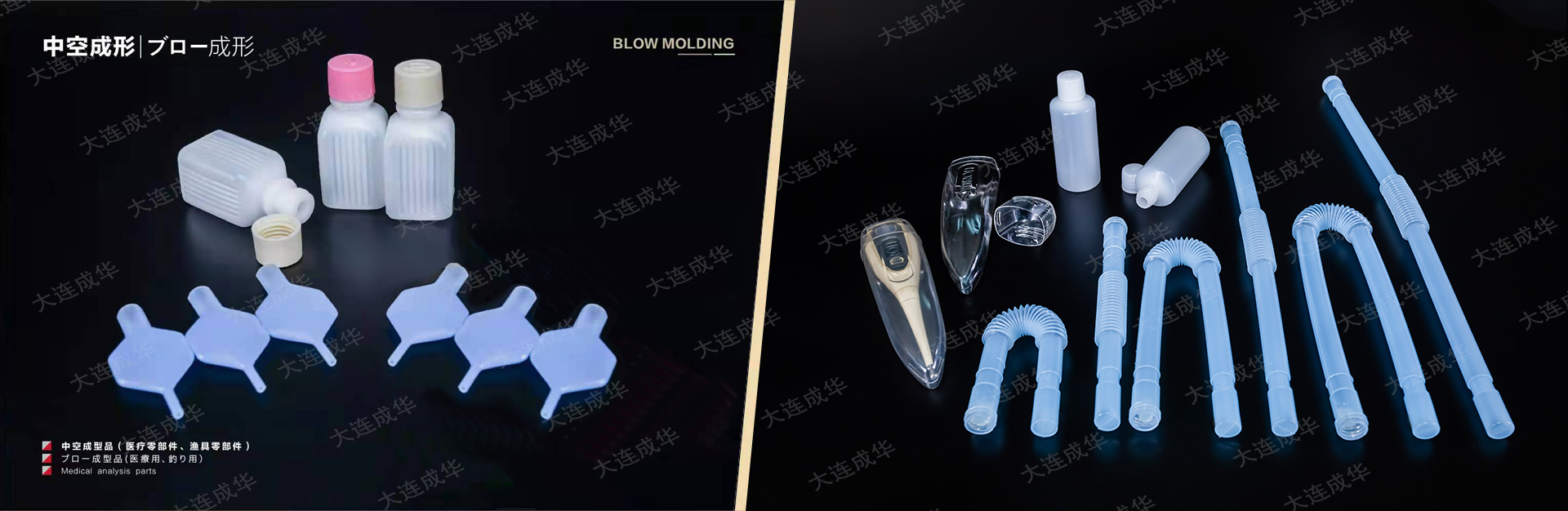
Dalian injection molding is a widely used plastic processing technology in the manufacturing industry, which involves injecting molten plastic material into a mold, cooling and solidifying it to form the desired shape of the product. The selection of materials is crucial for the success of injection molding, as it not only affects the performance of the product, but also directly relates to production efficiency, cost, and product quality.
1. Clarify the performance requirements of the product
Before selecting materials, it is necessary to clarify the performance requirements of the product. Different materials have different physical, chemical, and mechanical properties, such as:
Mechanical strength: If the product needs to withstand large loads or impact forces, high-strength materials such as polycarbonate (PC) or nylon (PA) should be selected.
Heat resistance: For products used in high-temperature environments, materials with good heat resistance should be selected, such as polyphenylene sulfide (PPS) or polyetheretherketone (PEEK).
Chemical resistance: If the product comes into contact with corrosive chemicals, materials with strong chemical resistance, such as polytetrafluoroethylene (PTFE) or polypropylene (PP), should be selected.
Electrical insulation: For electronic and electrical products, materials with good insulation properties should be selected, such as polyvinyl chloride (PVC) or polyoxymethylene (POM).
Transparency: If the product requires transparency or semi transparency, materials with high transparency, such as polymethyl methacrylate (PMMA) or polycarbonate (PC), should be selected.
2. Consider the processing performance of materials
The processing performance of materials directly affects the efficiency of injection molding and the quality of finished products. Here are some key processing performance indicators:
Liquidity: Materials with good fluidity are easier to fill complex mold structures and are suitable for producing thin-walled products or fine structures. For example, polyethylene (PE) and polypropylene (PP) have good fluidity.
Shrinkage rate: The shrinkage rate of different materials varies, which can affect the dimensional accuracy of the product. For example, polyamide (PA) has a higher shrinkage rate, while polystyrene (PS) has a lower shrinkage rate.
Thermal stability: The stability of a material at high temperatures determines its suitability for long-term injection molding. Materials with poor thermal stability may decompose or discolor during processing.
Crystallinity: Crystalline materials (such as PP and PA) shrink during cooling, while non crystalline materials (such as PC and PMMA) shrink less.
3. Cost and availability
Material cost is an important factor that cannot be ignored in injection molding. When choosing materials, it is necessary to balance performance and cost:
Material prices: High performance materials such as PEEK and PPS have higher prices, while general-purpose plastics such as PP and PE have lower prices.
Processing cost: Some materials may require higher injection molding temperatures or longer cooling times, which can increase processing costs.
Supply stability: Choose materials with sufficient supply in the market to avoid affecting production progress due to material shortages.
4. Environmental Protection and Sustainability
With the increasing awareness of environmental protection, material selection also needs to consider environmental factors:
Recyclability: Choosing recyclable materials such as PE and PP can help reduce environmental pollution.
Biodegradability: For disposable products, biodegradable materials such as polylactic acid PLA can be chosen.
Harmful substance content: Avoid using materials containing harmful substances (such as lead and cadmium) to ensure that the product complies with environmental regulations.
5. Mold design and material matching
Mold design also has a significant impact on material selection:
Mold temperature: Some materials (such as POM) require higher mold temperatures, while others (such as PS) do not.
Mold surface treatment: For materials that are prone to sticking to the mold (such as PA), special treatment of the mold surface is required.
Demolding ability: Choosing materials with good demolding ability (such as PP) can reduce the difficulty of demolding and improve production efficiency.
6. Use environment of the product
The usage environment of the product is crucial for material selection:
Outdoor environment: outdoor products need UV resistant and anti-aging materials, such as ASA or PP with anti-aging agent added.
Wet environment: For products in humid environments, materials with low water absorption, such as PP or PE, should be selected.
Food contact: Food contact products require materials that meet food safety standards, such as food grade PP or PET.
7. The potential for material modification
Many materials can be modified to improve performance or reduce costs:
Reinforcement material: Adding glass fiber (GF) or carbon fiber (CF) can improve the strength and rigidity of the material.
Filling material: Adding talcum powder or calcium carbonate can reduce costs and improve processing performance.
Flame retardant materials: Adding flame retardants can improve the flame retardant properties of materials, making them suitable for electronic and electrical products.
8. Experience and experimentation
In actual production, experience accumulation and experimental verification are important links in material selection:
Small batch trial production: Before large-scale production, conduct small batch trial production to verify the applicability of materials.
Performance testing: Conduct mechanical performance, heat resistance, chemical resistance and other tests on the product to ensure that the material meets the requirements.
Feedback optimization: Based on feedback on production issues, optimize material selection or adjust processing parameters.
9. Industry standards and regulations
Some industries have strict standards and regulatory requirements for materials:
Medical industry: Medical device products need to comply with biocompatibility standards, such as ISO10993.
Automotive industry: Automotive components need to comply with standards such as heat resistance and impact resistance, such as ISO6722.
Electronics industry: Electronic and electrical products need to comply with flame retardant, insulation and other standards, such as UL94.
10. Innovation and Development of Materials
With the advancement of materials science, new materials continue to emerge, providing more choices for injection molding:
Composite materials: Combining the advantages of multiple materials, such as carbon fiber reinforced plastic (CFRP).
Biobased materials: materials developed using renewable resources, such as biobased PE or PLA.
Smart materials: materials with special functions, such as shape memory polymers or conductive plastics.
The selection of injection molding materials is a complex process that requires comprehensive consideration of various factors such as product performance requirements, processing performance, cost, environmental friendliness, and usage environment. Through scientific selection and optimization, the quality and production efficiency of products can be improved, production costs can be reduced, and market demand can be met. In practical operation, only by combining experience accumulation and experimental verification can suitable materials and process solutions be found.