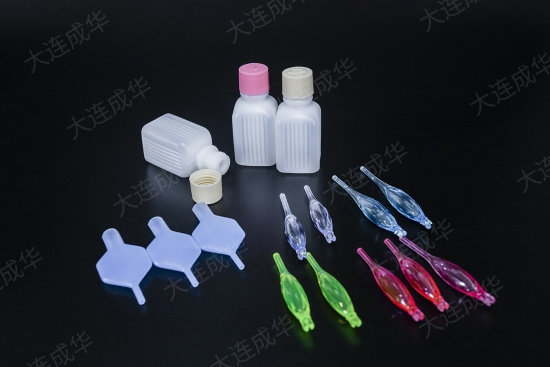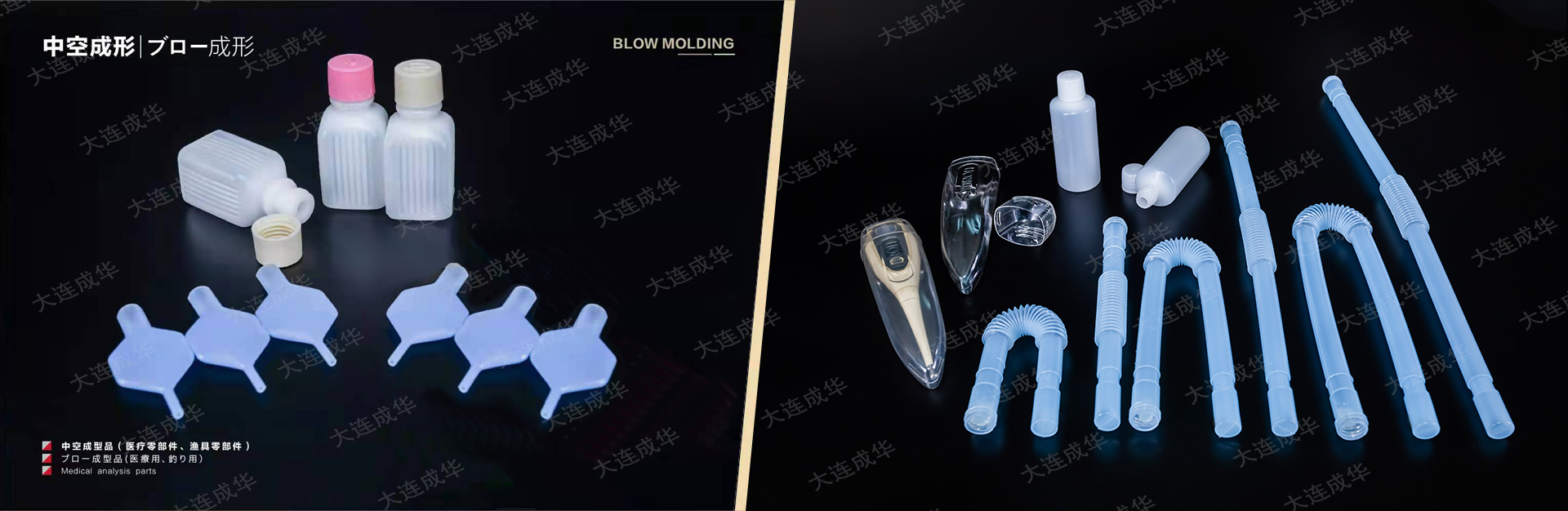
Blow Molding in Dalian is a widely used process in the production of plastic products, mainly used to manufacture hollow containers such as bottles, cans, oil tanks, etc. Although the process technology is mature, some common problems may still be encountered in the actual production process, such as uneven wall thickness, surface defects, dimensional deviations, etc. In order to ensure product quality and production efficiency, corresponding measures must be taken to avoid these problems.
1. Uneven wall thickness
Uneven wall thickness is one of the common problems in hollow forming, usually manifested as certain parts of the product being too thick or too thin, affecting the strength and appearance of the product.
reason:
Unreasonable mold design: The cooling system of the mold is uneven or the exhaust is poor, resulting in uneven distribution of plastic materials during the molding process.
Improper setting of process parameters, such as blowing pressure, temperature, time, etc., affects the fluidity and distribution of plastics.
Raw material issue: Inconsistent melt index (MI) or viscosity of plastic materials, resulting in uneven flow.
resolvent:
Optimize mold design: Ensure that the cooling system of the mold is evenly distributed, the exhaust hole design is reasonable, and avoid local overheating or insufficient cooling.
Adjust process parameters: Based on the shape and size of the product, set the blowing pressure, temperature, and molding time reasonably to ensure uniform distribution of plastic materials.
Choose appropriate raw materials: Use plastic materials with stable melt index and viscosity to ensure consistent flowability during the molding process.
2. Surface defects
Surface defects include bubbles, flow marks, orange peel patterns, etc., which affect the appearance quality and sealing performance of the product.
reason:
Raw material issue: Plastic materials contain moisture or impurities, which can cause bubbles or flow marks during the molding process.
Rough surface of the mold: The surface smoothness of the mold is insufficient, resulting in uneven adhesion of the plastic material during the molding process.
Improper process parameters, such as excessively high or low temperatures, can cause uneven flow or rapid cooling of plastic materials during the molding process.
resolvent:
Raw material pretreatment: Dry the plastic material before molding to remove moisture and impurities, ensuring the purity of the raw materials.
Improve the surface smoothness of the mold: Regularly clean and polish the mold to ensure a smooth surface and reduce the occurrence of surface defects.
Optimize process parameters: Based on the characteristics of the material, set the molding temperature, pressure, and cooling time reasonably to avoid surface defects caused by high or low temperature.
3. Dimensional deviation
Dimensional deviation refers to the deviation between the formed product and the designed dimensions, which affects the assembly and use of the product.
reason:
Mold wear: After long-term use, the dimensional accuracy of the mold decreases, leading to dimensional deviations in the formed product.
Unstable process parameters: such as temperature, pressure, and other parameters fluctuate greatly, affecting the forming accuracy of the product.
Inconsistent shrinkage rate of raw materials: Different plastic materials have different shrinkage rates, resulting in dimensional deviations after molding.
resolvent:
Regular maintenance of molds: Regularly check the dimensional accuracy of molds, promptly repair or replace worn molds, and ensure the dimensional stability of molds.
Stable process parameters: Through an automated control system, the stability of process parameters such as temperature and pressure is ensured, reducing the impact of fluctuations on product dimensions.
Choose suitable raw materials: According to the design requirements of the product, select plastic materials with stable shrinkage rate to ensure that the size after molding meets the requirements.
4. Flying edges and burrs
Flying edges and burrs refer to excess plastic material at the edges or seams of molded products, which affects the appearance and functionality of the product.
reason:
Poor mold closure: The mold closure accuracy is insufficient, resulting in plastic material overflowing during the molding process.
Improper process parameters: such as excessive blowing pressure or insufficient clamping force, causing plastic materials to overflow from the mold during the molding process.
Unreasonable mold design: The parting surface design of the mold is unreasonable, resulting in incomplete sealing of the plastic material during the molding process.
resolvent:
Improve the accuracy of mold closure: Regularly check the closure of the mold to ensure that it is tightly closed and to avoid plastic material spillage.
Adjust process parameters: Based on the characteristics of the mold and product, set the blowing pressure and clamping force reasonably to avoid burrs and burrs caused by excessive or insufficient pressure.
Optimize mold design: Reasonably design the parting surface of the mold to ensure that the plastic material can be completely sealed during the molding process, reducing the generation of burrs and burrs.
5. Deformation and warping
Deformation and warping refer to the shape changes that occur during the cooling process of the formed product, which affect its performance.
reason:
Uneven cooling: The cooling system design of the mold is unreasonable, resulting in uneven shrinkage of the product during the cooling process.
Excessive shrinkage rate of raw materials: The excessive shrinkage rate of plastic materials causes deformation of the product during the cooling process.
Improper process parameters: such as insufficient cooling time or high temperature, which may cause the product to fail to fully shape during the cooling process.
resolvent:
Optimize cooling system: Ensure that the cooling system of the mold is evenly distributed to avoid local cooling that is too fast or too slow, resulting in product deformation.
Selecting suitable raw materials: Based on the design requirements of the product, choose plastic materials with lower shrinkage rates to reduce deformation of the product during cooling.
Adjust process parameters: Based on the shape and size of the product, set the cooling time and temperature reasonably to ensure that the product can be fully shaped during the cooling process.
6. Insufficient strength
Insufficient strength refers to the mechanical properties of the molded product not meeting the standards, which affects the service life of the product.
reason:
Uneven wall thickness: Uneven wall thickness leads to insufficient strength in certain parts of the product, making it prone to cracking.
Raw material issue: The mechanical properties of plastic materials do not meet the standards, resulting in insufficient strength of the molded products.
Improper process parameters: such as low molding temperature or insufficient pressure, resulting in insufficient melting and bonding of plastic materials during the molding process.
resolvent:
Optimize wall thickness design: By reasonable mold design and process parameter settings, ensure uniform wall thickness of the product and improve overall strength.
Choose high-quality raw materials: Use plastic materials with stable mechanical properties to ensure that the strength of the molded product meets the requirements.
Adjust process parameters: Based on the characteristics of the material, set the molding temperature and pressure reasonably to ensure that the plastic material is fully melted and bonded during the molding process.
The common problems in the hollow forming process are often closely related to factors such as mold design, process parameters, and raw material quality. By optimizing mold design, setting process parameters reasonably, selecting high-quality raw materials, and regularly maintaining equipment, these problems can be effectively avoided, ensuring product quality and production efficiency. In actual production, operators should closely monitor each link in the molding process, promptly identify and solve problems, and ensure smooth production.