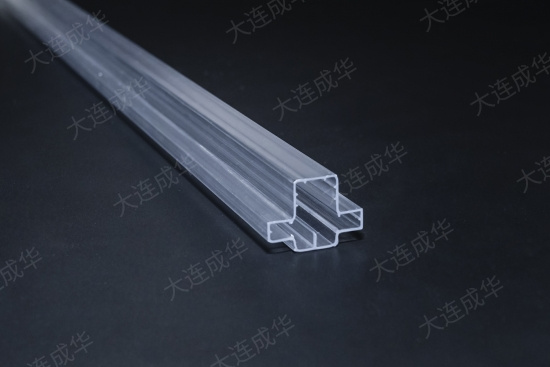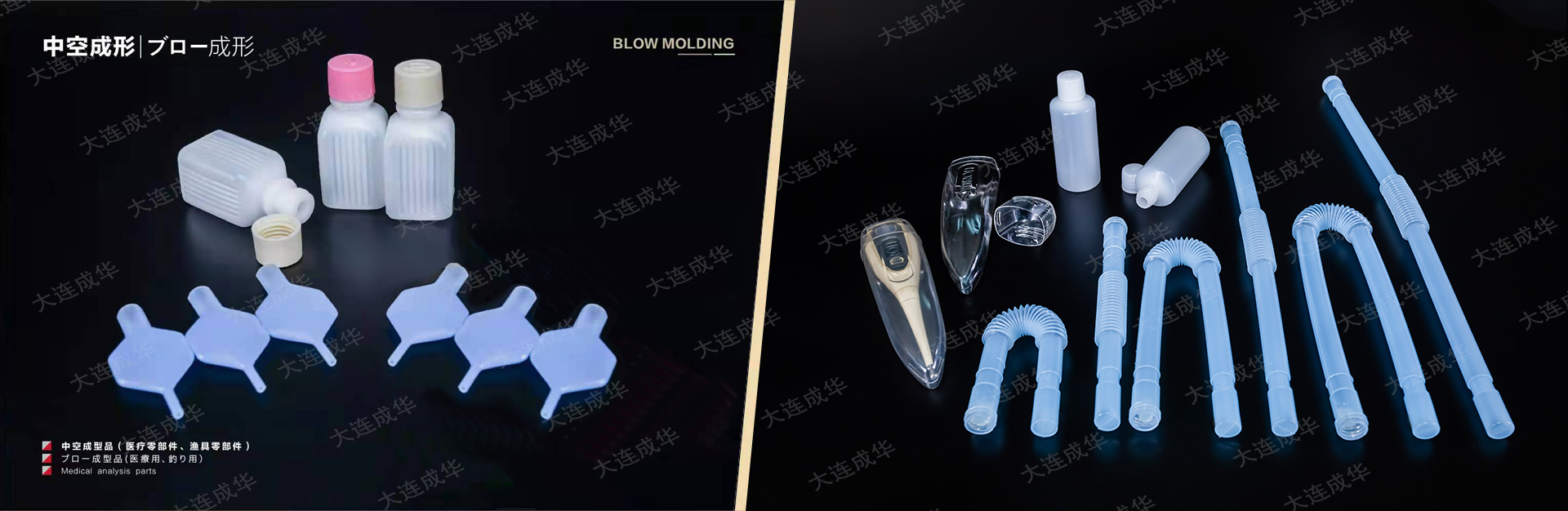
Dalian extrusion molding is one of the commonly used methods in plastic processing, and its temperature control has a decisive impact on the entire production process and the quality of the final product.
1、 The Influence of Temperature Control on the Melting Characteristics of Materials
During the extrusion molding process, temperature is the main factor affecting the melting state of plastics. Different plastic materials have specific melting temperature ranges, such as PVC processing temperature typically between 160-190 ° C, while PE is between 180-240 ° C. Accurate temperature control can ensure:
Uniform melting: Excessive temperature can cause material degradation, while insufficient temperature cannot achieve complete melting. Only by controlling within a better temperature window can a uniform melt be obtained, which is the basis for ensuring the quality of subsequent molding.
Viscosity adjustment: The viscosity of plastic melt is very sensitive to temperature. For every 10 ° C increase in temperature, viscosity may decrease by 10-15%. Appropriate temperature control can regulate the fluidity of the melt, so that it is neither too thin to cause insufficient strength nor too viscous to increase extrusion pressure.
Molecular structure protection: Many engineering plastics such as PC, PA, etc. are prone to molecular chain breakage at high temperatures. Accurate temperature control can prevent material thermal degradation and maintain its original mechanical properties.
2、 Temperature zoning control and extrusion stability
Modern extruders typically adopt a multi-stage heating zone design, with 5-8 independent temperature control zones from the feed section to the die head. The importance of this partition control is reflected in:
Progressive melting: A temperature gradient change is required from solid particles to complete melting. Low temperature in the feeding section prevents premature melting and bridging; The compression section gradually heats up to achieve complete plasticization; The homogenization section maintains a constant temperature to ensure the uniformity of the melt.
Shear heat management: The shear heat generated by the rotation of the screw may cause local overheating. Temperature control through zoning can compensate or offset the influence of shear heat, maintaining the temperature stability of the entire extrusion process.
Pressure control: Temperature directly affects the melt pressure. Temperature fluctuations can cause pressure changes, which in turn affect extrusion rate and product dimensional accuracy. Statistics show that temperature fluctuations of ± 5 ° C can cause a 3-5% change in extrusion volume.
3、 The direct impact of temperature on product performance
The physical and mechanical properties of extruded products largely depend on the processing temperature:
Surface quality: Low temperature can cause poor melt flowability, resulting in defects such as ripples and shark skin on the product surface; If the temperature is too high, it may cause material decomposition, resulting in bubbles and coke particles. Experimental data shows that within a better temperature range of ± 10 ° C, the surface roughness of the product can differ by 2-3 times.
Dimensional accuracy: The coefficient of thermal expansion makes product dimensions sensitive to temperature. For precision extruded parts, a 1 ° C change in die temperature may result in a size deviation of 0.05-0.1%. In high-end applications such as medical catheters, this deviation is often unacceptable.
Mechanical properties: The crystallinity of crystalline plastics such as PP and PE is affected by the cooling rate, which in turn depends on the melt temperature. Research has shown that increasing the extrusion temperature appropriately can increase the tensile strength of HDPE by 8-12%, but excessive temperature can actually lead to a decrease in performance.
4、 The relationship between temperature, production energy consumption, and efficiency
Temperature control is not only related to quality, but also directly affects production costs:
Energy consumption optimization: 60-70% of the extruder's energy consumption is used for the heating system. By precise temperature control to avoid unnecessary overheating, energy consumption can be significantly reduced. Practice has shown that optimizing temperature control strategies can save 15-20% of energy consumption.
Startup time: A reasonable heating curve can shorten the preheating time of the machine. The use of advanced PID temperature control system can reduce the preheating time by 30-50% compared to traditional temperature control.
Waste rate control: Unstable temperature is one of the main reasons for extruding waste. Statistics show that in systems with a temperature control accuracy of ± 1 ° C, the scrap rate can be reduced by 40-60% compared to systems with a temperature control accuracy of ± 5 ° C.
5、 Temperature control challenges in special processes
In some special extrusion processes, temperature control faces greater challenges:
Multi layer co extrusion: Accurate temperature matching is required between different material layers. The processing temperature of EVOH barrier layer is usually 30-50 ° C lower than that of PE base layer, requiring an independent temperature control system.
Thermal sensitive material processing: If PVC begins to decompose and release HCl above 190 ° C, the upper temperature limit must be strictly controlled while ensuring sufficient plasticization.
High viscosity engineering plastics, such as PTFE and PPS, require higher temperatures but narrower processing windows, and sometimes the temperature control accuracy needs to reach ± 0.5 ° C.
6、 The Development Trend of Temperature Control Technology
With the development of extrusion technology towards high precision and efficiency, temperature control technology is also constantly improving:
Intelligent temperature control system: using algorithms such as fuzzy control and neural networks to achieve adaptive temperature regulation and respond to material batch differences and environmental changes.
Infrared temperature measurement technology: non-contact real-time monitoring of melt temperature, with a response speed more than 10 times faster than traditional thermocouples.
Distributed temperature sensing: Fiber optic temperature measurement and other technologies can obtain temperature distribution along the axial and radial directions of the screw, providing more comprehensive data support for process optimization.
Temperature control is one of the core technologies in extrusion molding process, and its importance runs through the entire process from raw material plasticization to final product molding. With the development of plastic products towards high performance and precision, the demand for temperature control accuracy is also increasing. Modern extrusion processing enterprises must attach importance to the investment and optimization of temperature control systems, which is not only the key to ensuring product quality, but also an important way to improve production efficiency and reduce production costs. In the future, with the development of intelligent manufacturing technology, temperature control will become more precise and intelligent, opening up broader application prospects for extrusion molding processes.