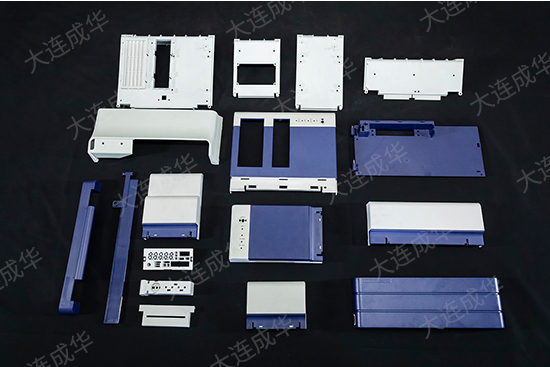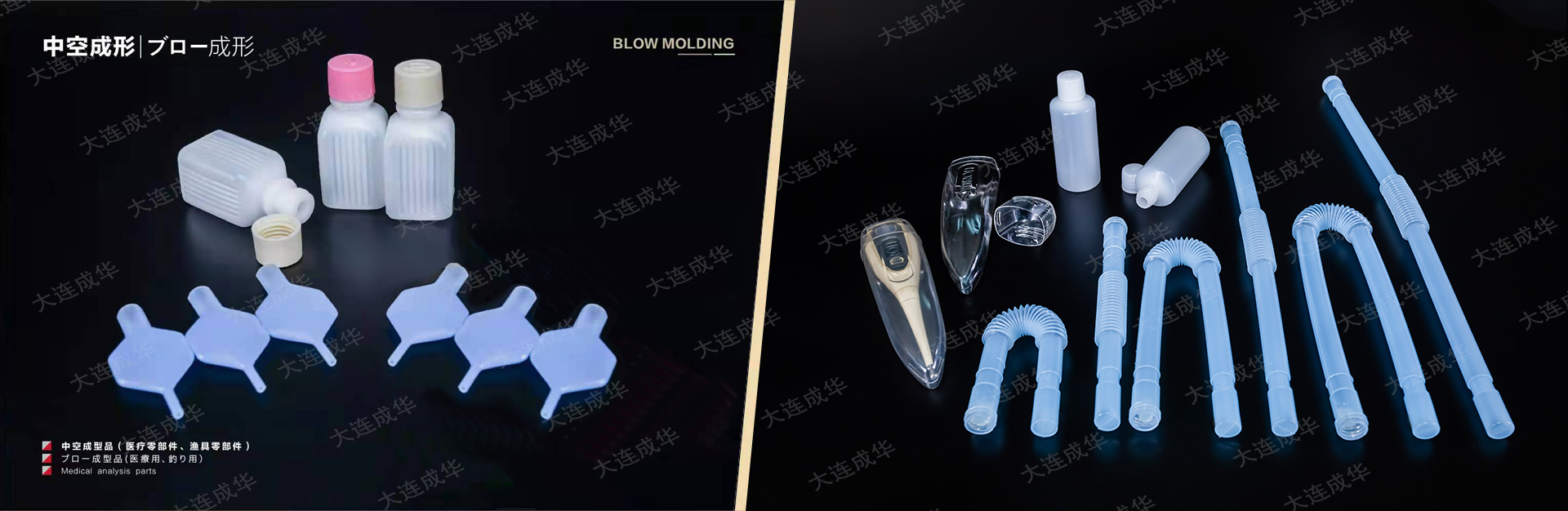
In Dalian injection molding process, deformation is a common and complex problem, which directly affects the dimensional accuracy, appearance quality and performance of products. Deformation is usually caused by uneven shrinkage of materials during cooling, unreasonable mold design or improper process parameters. In order to effectively avoid deformation, comprehensive control should be carried out from the aspects of material selection, mold design, process parameter optimization and subsequent treatment.
1. material selection and treatment
The shrinkage of materials is one of the important factors leading to deformation. The shrinkage of different materials varies greatly. Therefore, when selecting materials, appropriate materials should be selected according to product requirements and mold design.
Choose low shrinkage materials: for products with high dimensional accuracy requirements, you can choose low shrinkage materials, such as glass fiber reinforced engineering plastics (such as PA, PBT, etc.), which have low shrinkage and can effectively reduce deformation.
Material pretreatment: for materials with strong moisture absorption (such as nylon), sufficient drying treatment shall be carried out before injection molding to avoid uneven shrinkage caused by moisture absorption during the molding process, resulting in deformation.
2. mold design optimization
Mold design is one of the key factors affecting the quality of injection molding. Reasonable mold design can effectively reduce product deformation.
Uniform wall thickness design: uneven wall thickness of the product will lead to inconsistent cooling speed, resulting in uneven shrinkage and deformation. Therefore, when designing products, the wall thickness should be kept as uniform as possible to avoid areas with too large thickness differences.
Reasonable gate location: the location and number of gates directly affect the melt flow and cooling process. The gate should be set in the thick wall area of the product as far as possible to ensure that the melt can evenly fill the cavity and avoid deformation caused by flow imbalance.
Cooling system design: the cooling system shall be designed to ensure uniform cooling speed of all parts of the mold. The cooling water path should be as close to the surface of the cavity as possible, and the water path distribution should be reasonable to avoid local overheating or supercooling.
Push out mechanism design: the push out mechanism shall be designed to be evenly distributed as far as possible to avoid product deformation due to uneven push force. The position and quantity of push pins shall be reasonably arranged according to the shape and size of the product.
3. optimization of process parameters
The setting of process parameters directly affects the process of melt flow, filling and cooling. Reasonable process parameters can effectively reduce deformation.
Injection pressure and speed: the setting of injection pressure and speed shall be adjusted according to the shape and material characteristics of the product. Excessive injection pressure may increase the internal stress of the product and cause deformation; Too low injection pressure may lead to insufficient filling.
Too fast injection speed may lead to uneven melt flow, internal stress and deformation.
Holding time and pressure: the setting of holding stage is very important to reduce deformation. Proper holding time and pressure can compensate the shrinkage of the material during cooling and reduce the deformation caused by uneven shrinkage. Too short pressure holding time or insufficient pressure may cause voids or uneven shrinkage in the product.
Cooling time: the setting of cooling time shall ensure that the product can be fully cooled and finalized. If the cooling time is too short, the product may continue to shrink after demoulding, resulting in deformation; Too long cooling time will reduce the production efficiency. The cooling time shall be reasonably set according to the characteristics of the material and the thickness of the product.
Mold temperature: the mold temperature shall be set as evenly as possible to avoid inconsistent cooling speed due to excessive mold temperature difference. For products with high finish requirements, the mold temperature should be appropriately increased to reduce surface defects and internal stress.
4. subsequent treatment
After injection molding, appropriate subsequent treatment can also effectively reduce deformation.
Annealing: for products with large internal stress, annealing can be used to eliminate internal stress and reduce deformation. The annealing temperature and time shall be reasonably set according to the characteristics of the material.
Reshaping: for products that have been deformed, they can be corrected by reshaping. The shaping treatment usually carries out pressure shaping on the product through the fixture or mold to restore it to the design shape.
5. production environment control
The temperature and humidity of the production environment will also affect the injection molding process, especially in the high temperature and humidity environment, the material is easy to absorb moisture, resulting in uneven shrinkage and deformation. Therefore, the production workshop should maintain appropriate temperature and humidity to avoid adverse effects of environmental factors on the forming process.
6. simulation analysis and optimization
In modern injection molding process, computer aided engineering (CAE) technology can be used to simulate and analyze the melt flow, filling and cooling process, and predict the possible deformation problems. Through simulation analysis, it can be optimized in the stage of die design and process parameter setting, and potential deformation problems can be found and solved in advance.
The deformation problem in injection molding process is the result of multiple factors, which needs comprehensive control through material selection, mold design, process parameter optimization and subsequent treatment. Through reasonable measures and optimization, the deformation can be effectively reduced, the dimensional accuracy and appearance quality of the product can be improved, and the product can meet the design requirements. In actual production, various parameters should be flexibly adjusted according to specific conditions, and the process level of injection molding should be continuously improved in combination with simulation analysis technology.