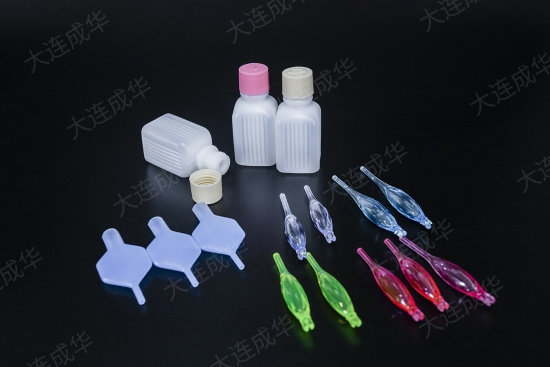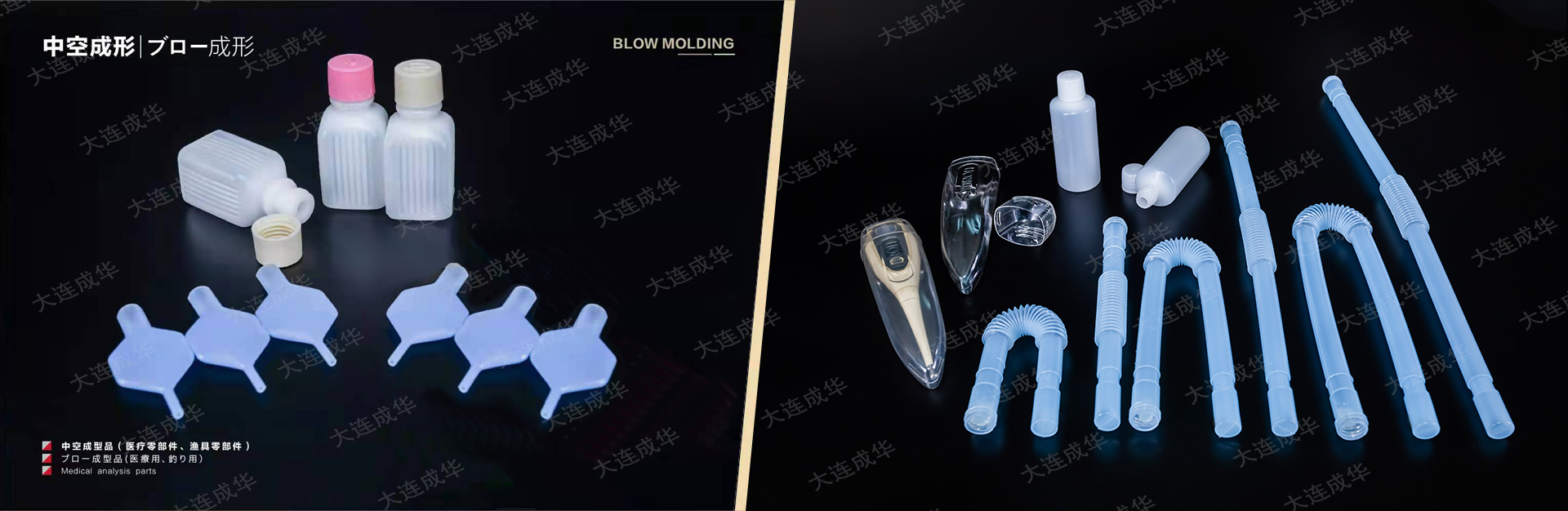
The wall thickness uniformity of hollow formed products in Dalian is a core indicator that affects their mechanical properties, weather resistance, and cost. Uneven wall thickness can lead to insufficient local strength (easily damaged) or material waste (locally too thick), requiring collaborative optimization from multiple dimensions such as process, equipment, raw materials, molds, etc., as follows:
1、 Fine tuning of process parameters
Process parameters are the fundamental guarantee and need to be precisely adjusted for materials and product shapes
Extrusion temperature and speed: Control the temperature of the material barrel and die head in sections to avoid fluctuations in melt flowability (high temperature can cause the billet to sag, while low temperature can result in poor flowability). The extrusion speed is kept constant by a servo screw to prevent unstable extrusion of the billet.
Blowing pressure and time: The pressure needs to match the thickness of the billet (insufficient mold sticking if it is too low, excessive local expansion if it is too high); The blowing time should be completed before the billet cools down to ensure uniform mold sticking.
Mold temperature: Maintain a uniform temperature (20-50 ℃) through symmetrical cooling channels to avoid uneven shrinkage caused by differences in cooling rates.
2、 Application of Equipment Accuracy and Wall Thickness Control System
Equipment accuracy is crucial, especially in controlling the thickness of the billet wall
Extrusion stability: high-precision barrier screw and melt pressure sensor are used to adjust the screw speed in real time to ensure stable extrusion volume.
Wall thickness control system:
Axial control (AWC): The servo valve adjusts the extrusion amount over time (such as thickening of the bottleneck/bottom, thinning of the bottle body) to match the axial requirements of the product.
Radial Control (RWC): Servo motor drives the lip clearance ring, adjusts the circumferential clearance, and solves the problem of uneven radial wall thickness.
Precision of mold clamping: Ensure uniform clamping force and avoid wall thickness differences on both sides caused by mold misalignment.
3、 Stable supply and pretreatment of raw materials
Material properties directly affect fluidity:
Material selection: Priority should be given to materials with small fluctuations in melt index (MI) (such as PET MI deviation ≤ 0.2g/10min) to reduce changes in fluidity.
Drying treatment: Moisture absorbing material (PET/PA) should be dried to a moisture content of ≤ 0.02% to avoid degradation and decrease in fluidity.
Uniform mixing: Ensure even mixing when adding additives to prevent local flow deviation.
4、 Mold design optimization
Mold design needs to balance mold sticking and cooling:
Cooling system: symmetrically distributed cooling channels (8-12mm away from the mold cavity) to ensure uniform cooling.
Mold cavity shape: Match the expansion ratio of the billet to avoid excessive local expansion (such as in the design of transition sections for irregular products).
Mold lip fine adjustment: The mold lip has manual/servo fine adjustment function to compensate for material flow deviation.
5、 Real time monitoring and closed-loop adjustment
Realize dynamic optimization through online detection:
Laser thickness measurement: Real time monitoring of billet/product wall thickness, feedback adjustment of wall thickness control system.
Manual inspection: Regularly inspect the wall thickness of different parts and adjust the process or mold in a timely manner.
In summary, the control of wall thickness uniformity requires multidimensional collaboration: intelligent devices improve accuracy, process parameters are refined, raw material supply is stable, mold optimization design is carried out, and ultimately a balance between product quality and cost is achieved.